
Shop our selection of optics from top brands like BUKOPS, Firefield, Konus, Garmin, and Burris. Hill Country Outfitters offers high-quality, precision optics built for hunters, long-range shooters, competition shooters, and tactical users who need clear glass and reliable aiming solutions in any condition. From magnified rifle scopes to compact reflex sights and rugged red dots, we carry a wide range of optics to fit every firearm and shooting style. Explore our gun scopes and red dot sights for precise aiming, or grab a pair of binoculars to spot game from a distance. Round out your kit with gun sights, rifles, handguns, and rifle ammunition from our full lineup.
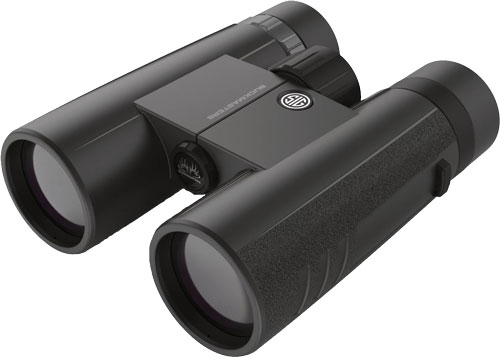


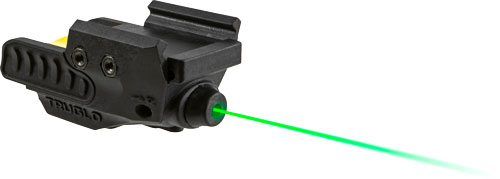

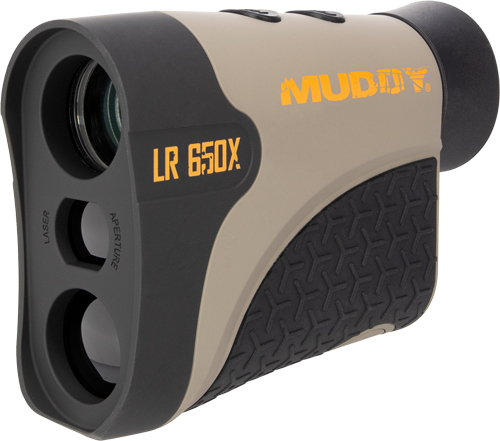
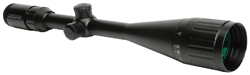
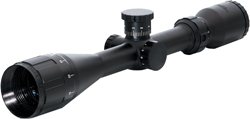
Buy optics online by comparing models, checking current availability, and reviewing specifications such as caliber, capacity, barrel length, and sight configuration. Selecting the right optical equipment depends on your platform, target distance, and the lighting conditions you expect to encounter.
Use these pointers to focus your search:
Browse optics online or visit the gun shop in San Antonio, Texas to handle different reticles, check eye relief, and compare glass clarity in person. Hill Country Outfitters serves customers in the nearby cities of Kerrville, Universal City, Boerne, New Braunfels, and Seguin, stocking optics for whitetail and mule deer hunting, varmint and predator work, three-gun competition, defensive carry, and precision rifle shooting across the Texas Hill Country.
Most optics ship without federal firearms restrictions and do not require a background check or ATF Form 4473, though night vision and thermal devices may be subject to International Traffic in Arms Regulations (ITAR) and other export control rules that prohibit shipment outside the United States. Texas does not impose state-level optic restrictions for civilian sporting use, and night vision and thermal optics are legal for hog and predator hunting under current Texas Parks and Wildlife rules.
Mount optics using torque-rated rings or mounts and verify zero before relying on a setup for hunting or defense, since loose mounting hardware is the most common source of accuracy and reliability issues. Store optics in padded cases or with lens caps installed to protect coatings, and contact the shop with questions about availability, fitment, or special-order configurations.
MOA (minute of angle) divides the circle into 21,600 units and translates to roughly one inch at 100 yards, while MIL (milliradian) divides the circle into 6,283 units and translates to 3.6 inches at 100 yards. Both systems are accurate, with shooters typically choosing based on personal preference and matching turret-to-reticle units.
Most general-purpose hunting is well-served by a 3-9x or 4-12x scope with a 40 to 44mm objective lens, offering enough magnification for shots out to 400 yards while preserving field of view at lower power. Higher magnification benefits long-range varmint and precision work but adds weight and cost.
Parallax is the apparent shift of the reticle relative to the target when the shooter’s eye moves off the optical center of the scope, which can cause point-of-impact errors. Most scopes are parallax-corrected at a fixed distance (often 100 yards) or include an adjustable parallax turret for precision shooting.
Most modern red dot sights from reputable manufacturers are waterproof to depths suitable for hunting and tactical use, with submersion ratings often listed in meters or as IPX ratings. Always check the manufacturer’s specific waterproof rating before relying on the optic in heavy weather.
In a first focal plane (FFP) scope, the reticle scales with magnification, so holdover and ranging marks remain accurate at any power. In a second focal plane (SFP) scope, the reticle stays the same size regardless of magnification, which keeps the reticle visible at low power but limits accurate holdovers to one specified magnification.
Texas allows night vision and thermal optics for hunting non-game animals like feral hogs and coyotes year-round on private property, with separate rules for game species. Always check current Texas Parks and Wildlife regulations for species-specific and season-specific rules.
Use a soft brush or compressed air to remove grit before any wiping, then apply a small amount of lens cleaning solution to a microfiber cloth and wipe in concentric circles from the center outward. Avoid using paper products, shirt hems, or solvents not rated for optical coatings.
Standalone optics are not classified as firearms under federal law and do not require a background check or ATF Form 4473 to purchase. Standard retail and online ordering rules apply, though night vision devices may be subject to export control restrictions.